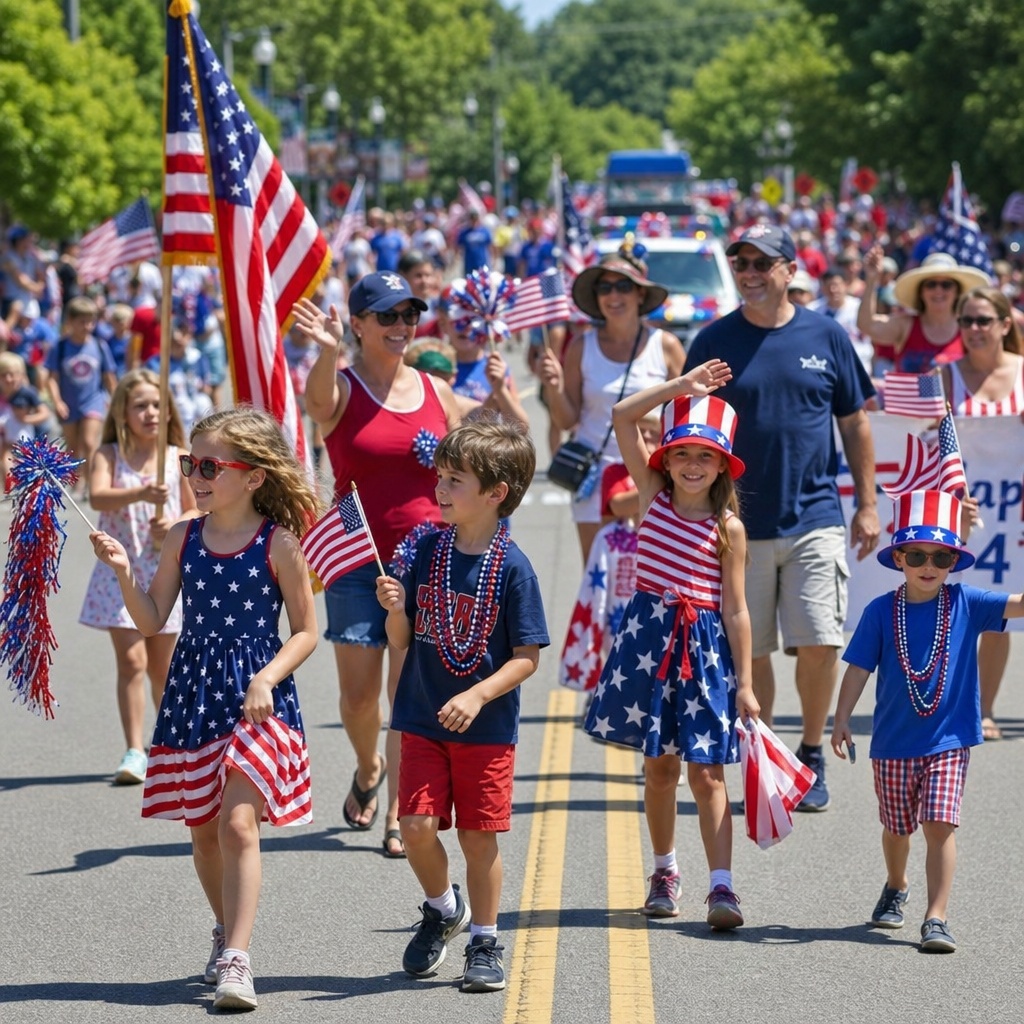
In years past, it was not unusual to see lawn chairs quietly appear along Sunset Boulevard several days before the parade itself. Long before the marching bands arrived or the first flag waved down the parade route, the excitement had already begun.
For generations, the Pacific Palisades Fourth of July Parade has represented the very best of small-town America woven into the fabric of Los Angeles. Residents eagerly await the familiar sights each year – scouts carrying banners, local schools, youth sports organizations, classic cars, community groups, first responders, and the beloved Pacific Palisades Oom Pa Pa Band moving down Sunset Boulevard past cheering families and neighbors. For many residents, the parade is more than a holiday tradition.
It is part of the identity of the Palisades itself.
This year, however, the anticipation feels different. In the months following the devastating Palisades Fire, there were moments when many wondered what the future of the community would look like.
Thousands of residents were displaced. Homes were lost. Familiar streets changed almost overnight. Families scattered across Southern California while navigating insurance claims, temporary housing, debris removal, and the emotional process of rebuilding.
In the aftermath of such profound disruption, community traditions suddenly take on a much deeper meaning.
Last year, because the Palisades could not host its traditional celebration, many beloved Palisadian groups participated in the Santa Monica Fourth of July Parade instead. Organizations including American Legion Post 283, Palisades YMCA, youth sports groups, and other community organizations marched together in a moving display of resilience and hometown pride.
For many Palisadians, seeing those familiar groups temporarily transplanted into Santa Monica was both emotional and reassuring. The community itself may have been displaced, but its spirit clearly was not. Now, the anticipated return of the parade to the Palisades represents something powerful – proof that despite tremendous loss, the spirit of the community remains very much alive.
Events like the parade remind people that they still belong to something larger than themselves.
For displaced residents returning to visit friends and neighbors, the parade becomes a reunion. For families rebuilding their homes, it offers reassurance that the traditions that made the Palisades special are enduring. For children who experienced the fear and uncertainty of evacuation and loss, seeing familiar celebrations return helps restore a sense of normalcy.
I also find myself wondering how some of the parade’s most beloved traditions may feel emotionally different this year. For decades, children have eagerly waited for the arrival of the fire engines, often among the loudest and most celebrated participants in the parade. This year, after the trauma and fear associated with the fire itself, the sight and sound of those trucks may understandably
stir complex emotions for some residents.
Yet, perhaps their presence may also come to symbolize something else: courage, service, protection, and the extraordinary efforts of first responders during one of the community’s darkest moments.
The Pacific Palisades has always been a uniquely engaged and interconnected community. Local schools, service clubs, religious institutions, sports leagues, and countless volunteers have long helped create the civic culture that makes the area feel more like a hometown than a neighborhood within a major city. That culture matters even more now.
This year, the cheers along the parade route will likely carry a little more emotion. The flags may feel more symbolic. The reunions may last a little longer.
And perhaps that is because everyone understands a little more clearly now that communities are not ultimately defined by buildings alone. They are defined by people showing up for one another, preserving traditions, and refusing to let hardship erase the bonds that tie neighbors together.
This year, the parade is not simply a celebration of Independence Day – it is a celebration of the enduring spirit of the Palisades community.
Richard Lombari is a displaced Pacific Palisades resident, Real Estate Wealth Advisor with Sotheby’s International Realty, 2nd Vice Commander of American Legion Post 283, Vice Chair of the Pacific Palisades Long Term Recovery Group (LTRG), The
Salvation Army Santa Monica Board Member, and Santa Monica Family YMCA Board Member.