
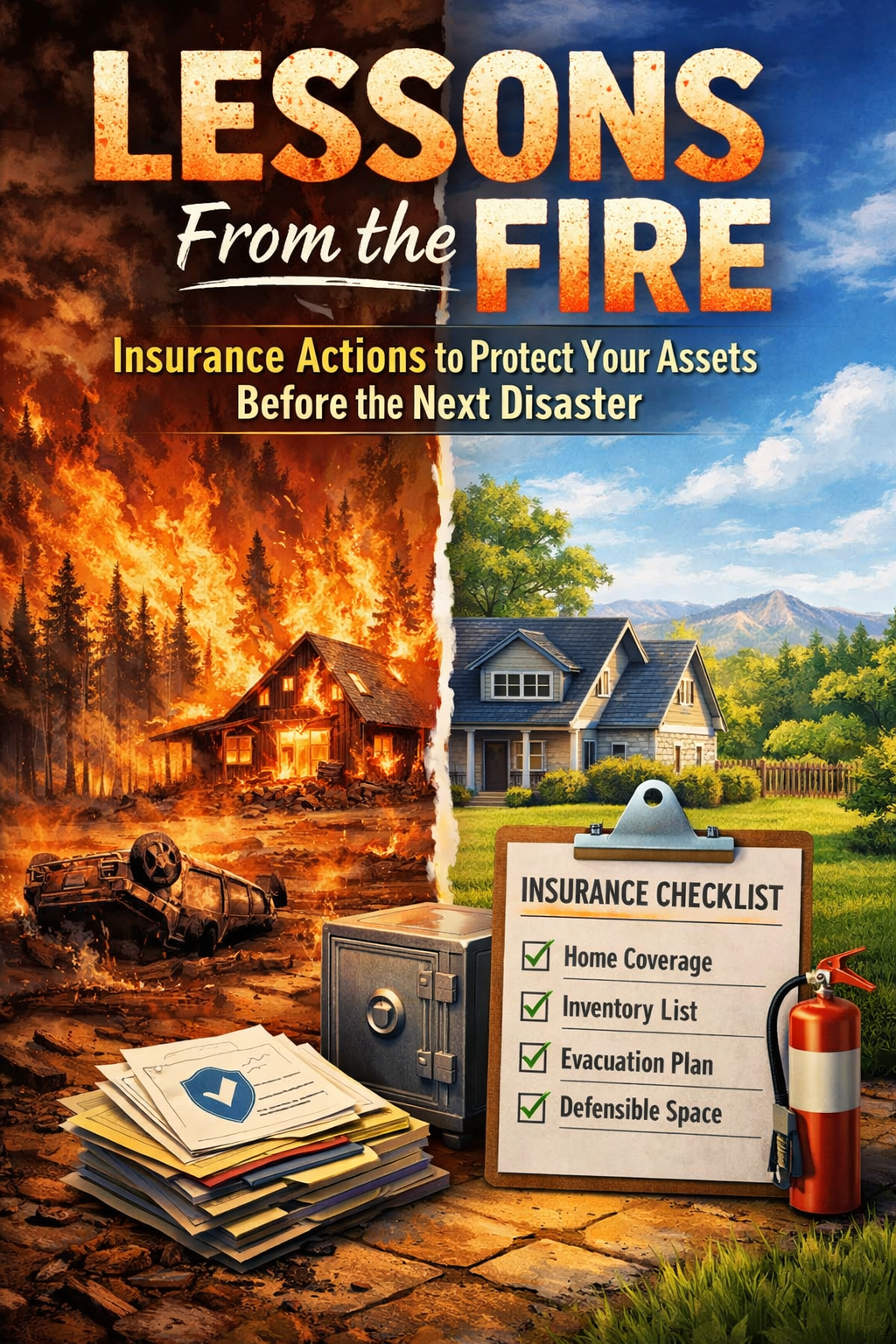
Lessons From the Fire: Insurance Actions to Protect Your Assets Before the Next Disaster
One of the hardest lessons my wife Julia and I learned after the fire is that the time to understand your insurance policy is not after a disaster – it’s long before one occurs.
Like many homeowners, I believed I had solid coverage. I knew my premium, trusted my carrier, and assumed that if the worst happened, the policy would do what it was supposed to do. What we discovered in the months following the loss of our home is that insurance is far more complicated than most of us realize, and the details matter.
In conversations with neighbors, clients, and others going through similar experiences, a few important lessons have emerged. These are things every homeowner should review now – before the next emergency arrives.
The first lesson is simple, know what your policy actually covers. Many people understand their monthly premium but not the structure of their coverage. Terms like dwelling coverage, personal property coverage, and additional living expense coverage all serve different purposes, and the limits attached to each can significantly affect your recovery after a loss.
Another critical issue is the difference between market value and replacement cost. In Los Angeles, the price someone might pay for a home and the cost to rebuild it can be very different things. Construction costs, permitting delays, and new building code requirements can all increase the cost of rebuilding. If your dwelling coverage hasn’t been reviewed in several years, it may not reflect current realities.
Documentation is another area many homeowners overlook. After a disaster, insurance companies often require an itemized inventory of lost possessions. Reconstructing that list from memory while dealing with the emotional and logistical challenges of displacement can be incredibly difficult. Julia and I often talk about how helpful it would have been to have a simple video walk-through of every room in the house saved to the Cloud.
Additional Living Expense coverage, often called ALE, is another area worth examining. When homes are damaged or destroyed, families may be displaced for far longer than expected. Debris removal, permitting, design, and construction timelines can stretch into many months or even years. Understanding the limits and duration of ALE coverage before you need it can prevent unpleasant surprises later.
Finally, there are policy details that many homeowners never think about until it’s too late: debris removal limits, coverage for landscaping and outdoor structures, and protection for building code upgrades.
None of this is meant to alarm anyone. Insurance is one of the most important tools we have to protect our homes and our financial future. But, like many things in life, its effectiveness depends on preparation.
Julia and I certainly wish we had taken the time to understand more of these details before the fire. If sharing these lessons encourages even a few homeowners to review their coverage, document their homes, and ask better questions of their insurance professionals, then something positive will have come from a very difficult experience. Preparation today can make all the difference tomorrow.
Richard Lombari is a Pacific Palisades resident, Real Estate
Wealth International Realty, 2nd Vice Commander of American Legion Post 283,
and Vice Chair of the Pacific Palisades Long Term Recovery Group
.